Viewing Image Files |
  
|
Viewing Image Files |
|
The HIPAA Claim Master application has a built-in image viewer that uses lightweight DLLs to display TIFF and PDF images (see Creating Image Files from EDI Files). It also allows you to navigate through the folder structure that has been set up. To view your images, follow the steps below:
1.Select Image > Image Viewer in the main menu to access the "Image Viewer" window.

The "Image Viewer" option is in the main menu window.
The following window will open:
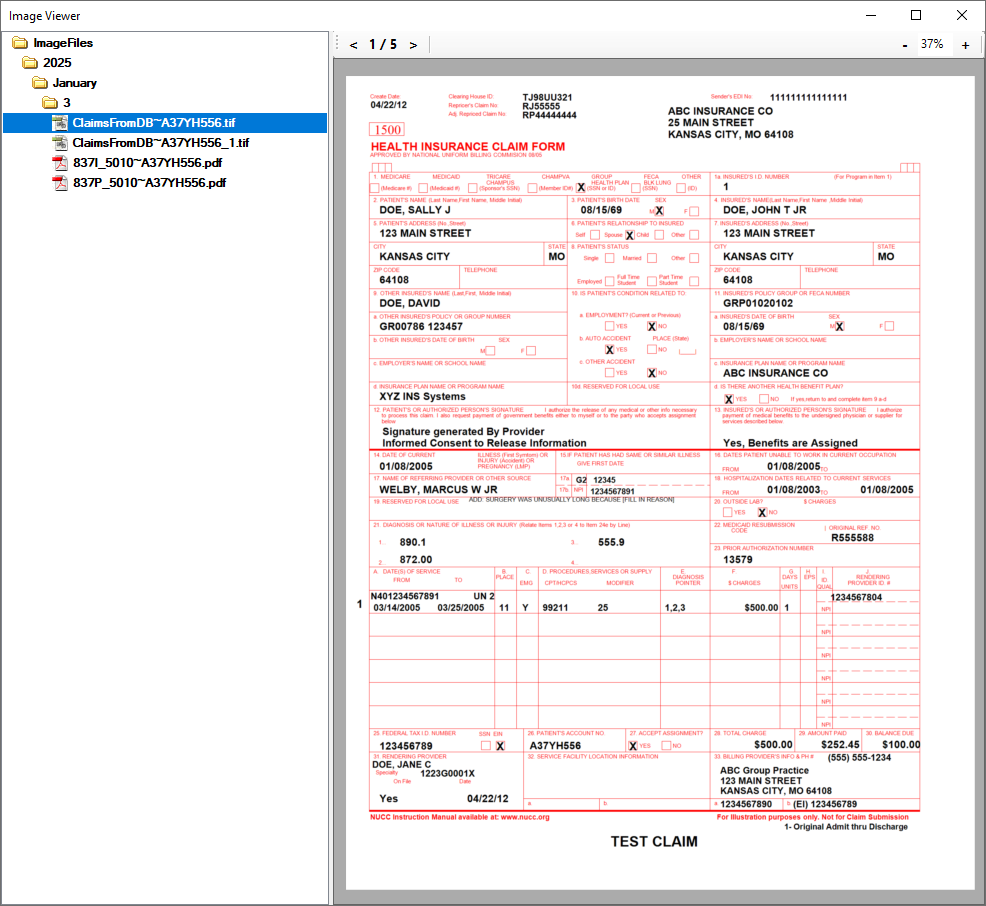
The "Image Viewer" window.
Note: If you do not set up the image index, an error pop-up window will open, as shown below. See Configuring an Image Index.
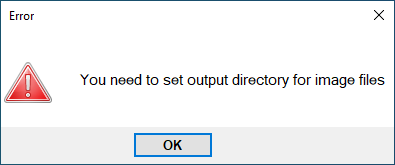
Error pop-up message if an image index is not configured.
2.Click on the image you want to view from the left-hand image list. If the image is in TIFF format, it will open on the right side of the window. If the image is in PDF format, it will open in a separate window.
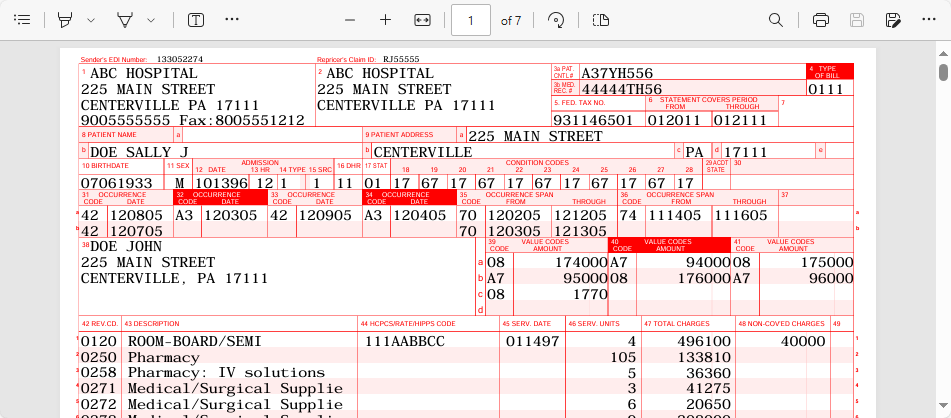
View of a PDF claim file.
3.Once you are done, click the "X" at the top-right corner of the image viewer window to close it.
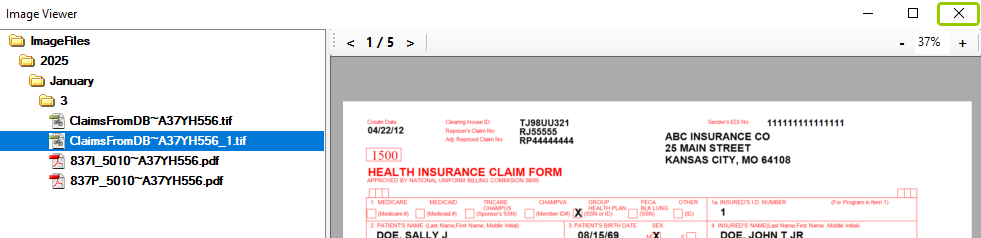
The "X" button to close the window.
See the details of each navigation tool below:
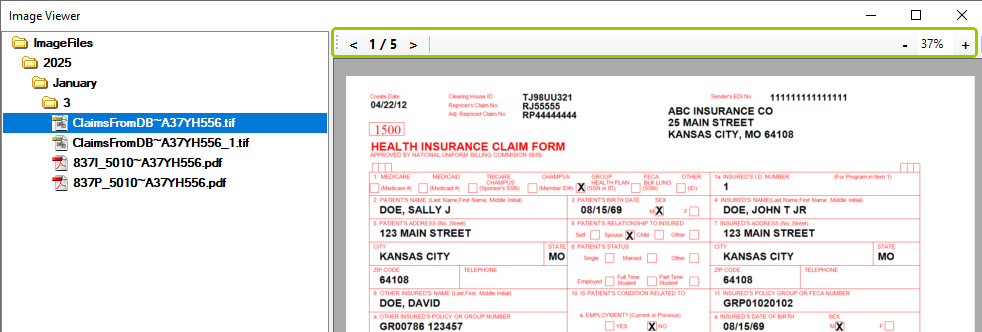
The "Navigation Header Bar" is at the top of the "Image Viewer" window.
The navigation header bar allows you to navigate through multi-page documents in the upper left corner of the image.
oPages — This option is located on the left side of the navigation header bar. It shows the number of pages and the current page in view; the arrows allow you to navigate through them.
The "Pages" navigation arrows.
oZoom — This option is located on the right side of the navigation header bar. It allows you to magnify or reduce the size of the image.
The "Zoom" tool.
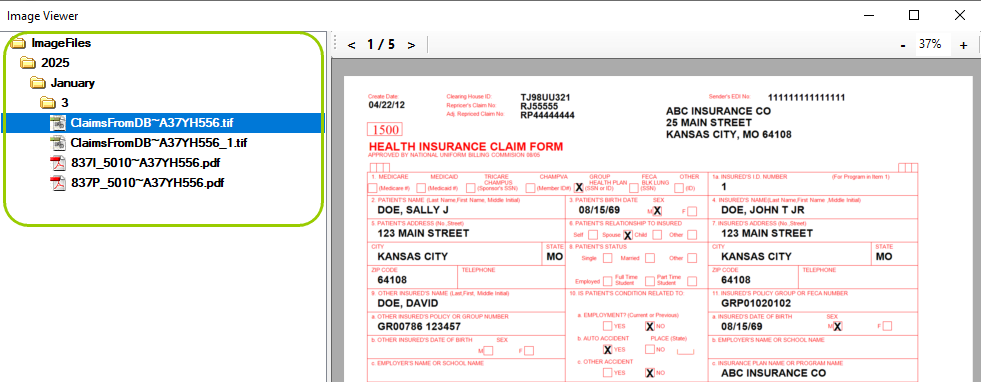
The "Image Panel" of the "Image Viewer" window.
The image panel is on the left side of the image viewer window. It lists all the generated TIFF and PDF image files. To access an image, click on a filename to display its content.
Though there are multiple types of image formats, the two most common and compatible with HIPAA Claim Master are TIFF and PDF:
oTIFF — Microsoft Windows has a Windows Photo Viewer that renders TIFF images. Unfortunately, it is not that practical. It omits lines in lower magnification and makes the image look sloppy, but it is sufficient for most.
oPDF — PDF files can be opened with Acrobat Reader, though there are other free PDF viewers and editors available as well.