What is EDI |
  
|
What is EDI |
|
An Electronic Data Interchange (EDI) file is a data file structured with the American Standard Code for Information Interchange (ASCII) standard, which is under the X12 chapter of the American Institute of Standards. This means that all the content of a transmission consists of ASCII characters. ASCII, or text files, can be viewed and edited with a regular text editor, but since EDI files do not create line breaks (line feeds and carriage returns) to mark the end of a line, an EDI file is too complex to understand, as shown in the following example:
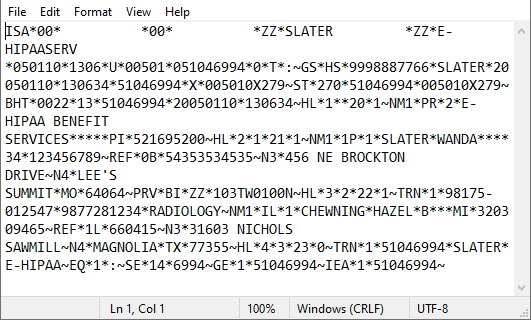
The view of raw EDI data.
As seen in the previous image, it is difficult to discern the individual data elements within the ASCII text file. An EDI editor is needed to get a more meaningful representation of the file. HIPAA Eligibility Checker has a built-in EDI editor. Here is how the previous file is displayed with the editor:
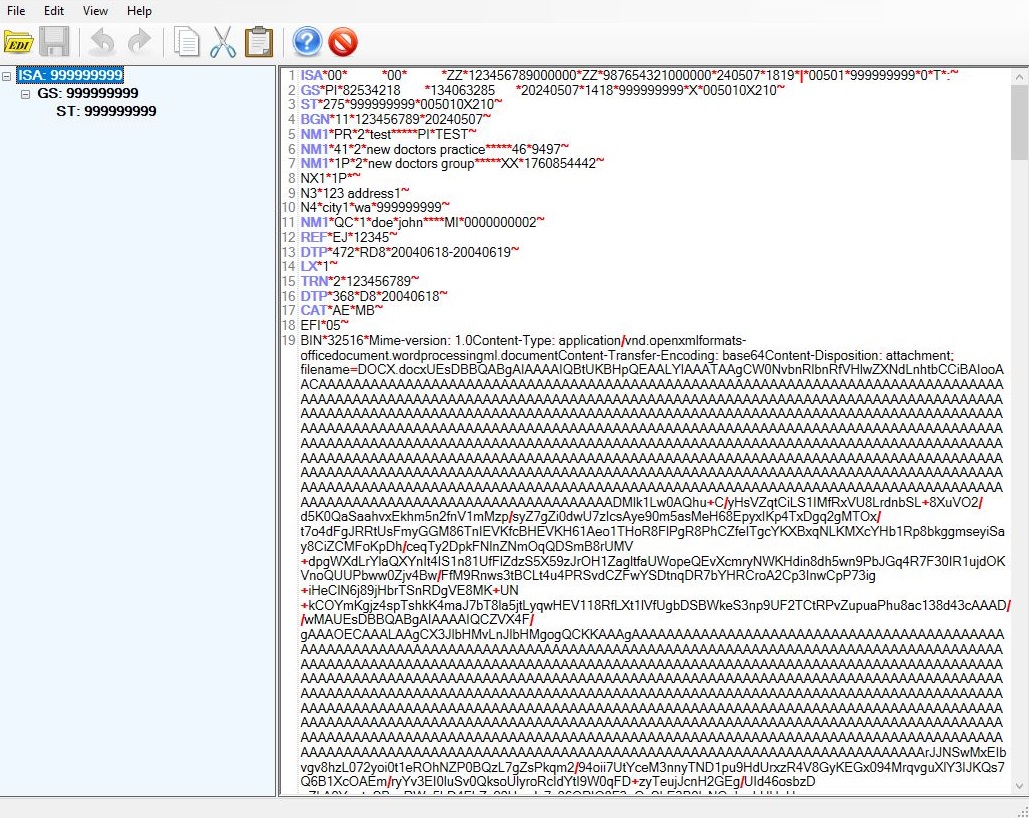
EDI data displayed in the built-in EDI Editor.
When this ASCII data is viewed with a special EDI editor, the individual data segments are visible, but it is still difficult to understand the content of the form. EDI files try to abbreviate long and complex descriptions into short and easy-to-read codes; without a translator, only true experts can understand the information.